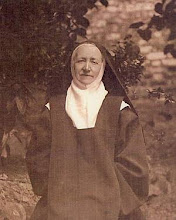
Excerpts from the Apostolic Letter of Pope St Pius X on St Teresa
In reward for her faith it was granted to her, as far as it is possible to the human mind in this mortal life, both to penetrate the secrets of God, even the profoundest and those most removed from human perception and intelligence, and to interpret and explain them with ease. And in this respect it seemed to those whom she chose as her spiritual directors that she might reasonably be compared to Moses, who was privileged to enjoy the presence and conversation to God.
Who has not heard how ardently she longed to share this gift of faith with those who had it not? While still only a child, she conceived the design and formed plans for crossing to Africa, to give to those savage peoples ‘the Christ or her blood’ (Brev. hymn). Being thwarted in her intention, she wept for the pitiable condition of pagans and heretics all her life long, and was filled with holy envy of those who led men back from the darkness of error and sin to the light of truth and holiness. Hindered by her sex and condition of life from taking part in apostolic labour, she put on the spirit of Elias and undertook what is called the apostleship of prayer and penance. To this end, since she was unable to join in the work of spreading the faith, she set herself to practise the evangelical counsels with all her might, convinced that the more she advanced in holiness the more acceptable to God would be her prayers for the spread of Christianity and the salvation of souls. Finally, her desire of defending Christian doctrine and making it known may be gathered from the importance which she attached to the catechism; there was no book which she wished her daughters to take up more frequently or read more diligently.
Another of the chief glories of Teresa, which deserves particular mention because it is so opposed to the spirit of the age, was her singular love for her Lord Jesus. It is regrettable that men have blotted out of memory the answer which Christ gave to His apostles when they enquired the way that would lead them to God; Christ replied; ‘I am the way and the truth and the life. No man cometh to the Father, but by me’. (John 14:6) How completely this was forgotten by those who were called Quietists, and by some innovators of that sect! But it was deeply impressed on the mind and soul of this holy virgin. Therefore, whatever benefits she received from God, she attributed them to Christ; whatever good she sought from God, she sought it from Christ. She made Christ her sole master by whom to regulate her daily actions her sole guide to lead her up the heights of divine contemplation. All who entertained the like feelings towards Christ, she called most happy; all others she regarded as most wretched, because of their want of faith. And her manner of life accorded well with her sentiments; for the one object of her endeavours was to order her life after the example of Jesus Christ, and by imitating him to engrave his image more and more on her soul so that she might truly say with the Apostle: ‘To me, to live is Christ; and to die is gain’ (Philippians 1:21)
Having such a master for her rule of life, she learned promptly to forsake the things of the earth, and with earnestness to purify her soul from even slight blemishes and adorn it with virtue. Thus she steadily progressed until she was so fashioned after the image of her Lord that whatever hardships, cares, and sorrows he suffered while on earth, and whatever joys and consolations were his, all these Teresa likewise experienced by the force of that love which so intimately united her to him. And since it is an effect of charity that, while it inflames the soul, it at the same time quickens and enlightens the mind, Teresa was so far favoured by God that she not only beheld the abundant and most perfect virtues of the Christ Man, but she was admitted by contemplation to the inmost mysteries of the Word of God; still more, she was made worthy to have disclosed to her not a few of the secrets of the adorable Trinity, and to be addressed by the Son of God with the words: ‘Henceforth thou shalt, like a true spouse, be zealous for my honour; for now I am all thine, and thou art all mine.’
1 Oct 2010
14 Sept 2010
St Pius X on our Holy Mother St Teresa
Excerpts from the Apostolic Letter of Pope St Pius X on St Teresa
The Lord so filled her with the spirit of wisdom and intellect and with the treasures of His grace, that, as a star in the firmament, her splendour will shine in the house of God for all eternity.
(Bull of Canonisation)
Thus spoke Pope Gregory XV about St Teresa of Avila. And how truthfully! For this saintly woman has been of so much service in instructing the faithful in the way of salvation that she would seem to be little, if at all, beneath those great Fathers and Doctors of the Church whom we have named.
It is remarkable how she was gifted by nature for her heavenly office of instructress in the ways of virtue. Her marvellously keen intellect, her noble and generous soul, her sure judgement, her prudence in dealing with people and in business affairs, no less than her sweet disposition and pleasant manner, won for her the affections of everyone. But her natural endowments were altogether eclipsed by her supernatural gifts. Although among her contemporaries there were many persons distinguished for their holiness of life and knowledge of things divine – so that period may justly be called the golden age of Catholic Spain - it must be admitted that Teresa combined in herself the virtues and gifts of all that pious band whom she numbered among her intimate friends and advisers.
It would take long, and we do not intend, to describe the many excellences of this illustrious woman. But we judge it most opportune to set before you, beloved children, some considerations about her virtues – they will be to you a source of profitable meditations, and, through you, a source of instruction to Christians.
In the first place, seeing that those things which exceed the compass of the human reason and lie outside the narrow circle of nature, are nowadays regarded lightly by so many, or even contemptuously thrust aside as worthless, it will be useful to investigate the strong faith of Teresa. Since faith is the substance of things to be hoped for,’ that is, the root (as it were) of the divine and heavenly life in man, and the foundation on which the whole fabric of Christian perfection is built, it wins our admiration to see to what an extent Teresa lived by faith and was guided by it alone of her counsels, her words, her deeds. None showed more loyal obedience to the Church, the mistress of truth; none clung to its doctrines more unswervingly. Not only was she unshaken by the wiles of heretics and the deceits of the devil, but she stated in writing that if an angel or a voice from heaven should propose anything to her belief which was not conformable to the doctrine of the Church, she would never in any way believe it. And, further, we know that she was ready to face a thousand deaths, if need be, in defence of the faith. To her nothing was clearer or more evident that the truth of the Christian dogmas; indeed, the more inscrutable they were to human intelligence, the more whole-heartedly did she assent to them.
Therefore, when she approached the adorable sacrament, her mind seemed absorbed as if all her affections were rapt in contemplation of this great mystery. As the same Pope Gregory, our predecessor, says:
She beheld so clearly in the Blessed Eucharist, with the eyes of her mind, the Body of Our Lord Jesus Christ, that she asserted that she was not in the least envious of those who beheld our Lord with the eyes of the body (Bull of Canonisation).
The Lord so filled her with the spirit of wisdom and intellect and with the treasures of His grace, that, as a star in the firmament, her splendour will shine in the house of God for all eternity.
(Bull of Canonisation)
Thus spoke Pope Gregory XV about St Teresa of Avila. And how truthfully! For this saintly woman has been of so much service in instructing the faithful in the way of salvation that she would seem to be little, if at all, beneath those great Fathers and Doctors of the Church whom we have named.
It is remarkable how she was gifted by nature for her heavenly office of instructress in the ways of virtue. Her marvellously keen intellect, her noble and generous soul, her sure judgement, her prudence in dealing with people and in business affairs, no less than her sweet disposition and pleasant manner, won for her the affections of everyone. But her natural endowments were altogether eclipsed by her supernatural gifts. Although among her contemporaries there were many persons distinguished for their holiness of life and knowledge of things divine – so that period may justly be called the golden age of Catholic Spain - it must be admitted that Teresa combined in herself the virtues and gifts of all that pious band whom she numbered among her intimate friends and advisers.
It would take long, and we do not intend, to describe the many excellences of this illustrious woman. But we judge it most opportune to set before you, beloved children, some considerations about her virtues – they will be to you a source of profitable meditations, and, through you, a source of instruction to Christians.
In the first place, seeing that those things which exceed the compass of the human reason and lie outside the narrow circle of nature, are nowadays regarded lightly by so many, or even contemptuously thrust aside as worthless, it will be useful to investigate the strong faith of Teresa. Since faith is the substance of things to be hoped for,’ that is, the root (as it were) of the divine and heavenly life in man, and the foundation on which the whole fabric of Christian perfection is built, it wins our admiration to see to what an extent Teresa lived by faith and was guided by it alone of her counsels, her words, her deeds. None showed more loyal obedience to the Church, the mistress of truth; none clung to its doctrines more unswervingly. Not only was she unshaken by the wiles of heretics and the deceits of the devil, but she stated in writing that if an angel or a voice from heaven should propose anything to her belief which was not conformable to the doctrine of the Church, she would never in any way believe it. And, further, we know that she was ready to face a thousand deaths, if need be, in defence of the faith. To her nothing was clearer or more evident that the truth of the Christian dogmas; indeed, the more inscrutable they were to human intelligence, the more whole-heartedly did she assent to them.
Therefore, when she approached the adorable sacrament, her mind seemed absorbed as if all her affections were rapt in contemplation of this great mystery. As the same Pope Gregory, our predecessor, says:
She beheld so clearly in the Blessed Eucharist, with the eyes of her mind, the Body of Our Lord Jesus Christ, that she asserted that she was not in the least envious of those who beheld our Lord with the eyes of the body (Bull of Canonisation).

26 Aug 2010
Carmelite Spirituality - Part 4 by Fr Paul Marie of the Cross OCD
III. THE RULE AND ITS SPIRIT
Many centuries have to pass before we possess documents giving evidence of the presence of hermits on Mount Carmel. The first definite text goes back to 1177; it comes to us from the Greek monk John Phocas. Consequently exact information about the kind of life the solitaries led on the mountain of Elias cannot be obtained before this date.
But in 1209 the "Ermitains dou Carme" had been established near El Chader(which means "the school of the prophets"), beside Wadi-Ain-Es-Siah (which means "the fountain of Elias"). There it seems they had settled about 1150 and had followed a number of prescriptions belonging to the great monastic tradition. Now they asked Albert Avogadro, patriarch of Jerusalem, for a Rule which would permit them "to lead the form of religious life they had chosen so that they might live dependent upon Jesus Christ and serve Him faithfully with a pure heart and a good conscience".
In this way is established a spiritual continuity, between the "Ermitains dou Carme" and the "sons of the Prophets." It also offers proof of the fact that the Rule (which was soon to be that of the Blessed Virgin Mary of Mount Carmel) repudiated nothing of the past. By means of this Rule the monks living on Carmel were able to live the life of Elias, their father, in a Christian climate.
The New Testament fulfills the Old. In its turn the Rule of Carmel fulfills the School of the Prophets. The spirituality of Carmel has no difficulty in developing the basic elements drawn from its biblical origins within an evangelic life of perfection. Henceforth it is in the light of Jesus Christ and in dependence on Him, characteristics of the Rule from its very first lines, that its spirituality must be considered.
In fact it is to Christ that the Carmelite turns, offering Him prayer and love. And it is following Him that the Carmelite intends to walk "with a pure heart and a good conscience". Elias and those who followed him, had been in search of all that would
lead them to God and favor their meeting with Him: silence, solitude, desert, sense of the divine absolute, thirst for a direct and ardent contact with God in the heart of prayer. All these are for the Carmelite a path leading to Jesus Christ, the Son of the Living God.
The Spirituality of the Rule.
Codifying a form of life spontaneously adopted by the hermits and informing us at the same time of the spiritual principles which guided them, a knowledge of this Rule is particularly precious. It enables us not only to discover the spirit of Carmel; it also gives new insights about those whom it binds. John of Saint-Samson was later to say: "Our primitive Rule is extremely basic and concise; it is more inwardly in regard to the spirit than outwardly in regard to expression".
It is always important to know the spirit in which the special ends of an order are to be sought, as well as the external works for which it was founded. Now the spirit is usually only one of the constituent elements of the order, one characteristic among many others. But, when an order has only a spiritual work, and no other end than to promote and sustain spiritual life, then the spirit is everything. The Rule of Carmel makes this clear in its preamble:
"It possesses the austere quality of great spiritual texts, the delicacy of things from above. It seems freed from all accidental detail of space as well as time. Rising above contingencies of matter it does not even stop to discuss questions about the organization of life. It is concerned with what is within. It seeks to waken divine powers slumbering in the contemplative soul. It is an invitation to live rather than a formula of life."
Is it possible to discover the spirit of an interior Rule if one does not possess an interior spirit? From the first, Carmel has insisted on this thirst for solitude and silence, this attraction for the desert as the best place for the divine meeting and for contemplation. The Rule takes this setting on the spiritual plane and makes it interior. The cell becomes the desert where the soul meets its God. Prayer becomes its conversation, its occupation "from morning to night", its "interior life". "Let each remain in his cell, or near it, meditating day and night on the Law of the Lord and watching in prayer."
Can the climate of this interior life, of this prayer, be discovered in the Rule? And can the Rule help us to describe the spirituality of Carmel? So sober is the text and so brief that the answer would at first seem to be, no. But considered from within, the text becomes much more revealing.
First of all, this sobriety itself appears eminently characteristic of the spirit which imposed it. It is an immediate introduction to a spirituality freed from the letter and utterly detached. The soul realizes that it must sell all to acquire the hidden treasure; that the kingdom of God alone matters: all else will be given to it over and above.
The sobriety is accompanied by a liberation from every spirit of individualism. Just as "the brother hermits who live on Mount Carmel" had recourse to the Church in the person of the patriarch of Jerusalem to obtain a Rule (and it will be remembered that when the greater reformer was on her death bed she gloried only in the fact that she was "a daughter of the Church"), so we see even now that the Rule requires that the Divine Office be recited according to the freely embraced " regulations laid down by the Sovereign Pontiffs and the customs approved by the Church".
What would men, fiercely devoted to spiritual liberty and accustomed to the breeze that comes from the desert or the sea, have to do with special forms and complicated methods? Instinctively they cling to what is most simple and ordinary because that is what makes it possible for them to give themselves in peace to "the one thing necessary".
Or course the principle of authority is affirmed, obedience is exacted, as well as silence, work, and the renunciation of all property. But this is to be done in the spirit to which the Gospel has accustomed us. All these are simple means to a single and uniquely necessary end: union with God.
Therefore the Rule is extremely simple and supple, not only because everything in it is ordered and directed to a single end but also because it does not hesitate to make use of all means, according to the gentle and flexible way of the spirit. We read in the Rule: "You may... inasmuch as the Prior shall deem it fitting... when that can be done conveniently... unless he be lawfully occupied in some other way... taking into consideration the age and the needs of each one... when that may be done
without trouble... unless obliged by sickness or the weakness of the body or by some other just cause to break the fast, because necessity knows no law...".
Nothing cut and dried, nothing narrowly literal but a simple and truly spiritual means of enabling souls spontaneously to advance in the path of the absolute. This is the spirit of the Gospel: "If thou wilt...".
The Rule is not unaware that a life of union with God rests on the foundation and generous practice of renunciation. But it asks for a renunciation which "without stifling the soul will enable it to be aware of its poverty so that at every instant it will turn toward God" of course, no progress is possible without effort and so there is a virile note in every part of the Rule. With Job it repeats: "Man's life on earth is a temptation" and "Those who live piously on earth will suffer persecution". "Therefore, set about with all zeal to clothe yourself with the armour of God". How could we fail to be reminded, when we see that the Rule lists all the armour recommended by Saint Paul, that it was made for "Crusaders", eager to place themselves at the service of their "Lord" Jesus Christ, Crusaders who were faithful to their ancestors: those great solitaries whose heroic struggles with the flesh and the devil tradition has recorded.
But the ascetic side of the Rule is tempered. Effort, renunciation, work, silence appear above all as means of stripping the soul of self, of freeing it so that unhampered it may advance more surely along the paths of divine union.
All that the Rule offers along this line comes straight from the Gospel, whose fragrance it retains. And all this is perfectly integrated with what it has received from its origins. This completes the Rule and adds depth, laying down a path through the desert where the soul can advance without getting lost. "If anyone wishes to be My disciple, let him renounce himself and follow Me".
At all times Carmel longed for God. The Rule points out the way. The way does not consist in a series of didactic lessons, or formulas, or techniques but the study of the living way which is Christ Jesus.
Many centuries have to pass before we possess documents giving evidence of the presence of hermits on Mount Carmel. The first definite text goes back to 1177; it comes to us from the Greek monk John Phocas. Consequently exact information about the kind of life the solitaries led on the mountain of Elias cannot be obtained before this date.
But in 1209 the "Ermitains dou Carme" had been established near El Chader(which means "the school of the prophets"), beside Wadi-Ain-Es-Siah (which means "the fountain of Elias"). There it seems they had settled about 1150 and had followed a number of prescriptions belonging to the great monastic tradition. Now they asked Albert Avogadro, patriarch of Jerusalem, for a Rule which would permit them "to lead the form of religious life they had chosen so that they might live dependent upon Jesus Christ and serve Him faithfully with a pure heart and a good conscience".
In this way is established a spiritual continuity, between the "Ermitains dou Carme" and the "sons of the Prophets." It also offers proof of the fact that the Rule (which was soon to be that of the Blessed Virgin Mary of Mount Carmel) repudiated nothing of the past. By means of this Rule the monks living on Carmel were able to live the life of Elias, their father, in a Christian climate.
The New Testament fulfills the Old. In its turn the Rule of Carmel fulfills the School of the Prophets. The spirituality of Carmel has no difficulty in developing the basic elements drawn from its biblical origins within an evangelic life of perfection. Henceforth it is in the light of Jesus Christ and in dependence on Him, characteristics of the Rule from its very first lines, that its spirituality must be considered.
In fact it is to Christ that the Carmelite turns, offering Him prayer and love. And it is following Him that the Carmelite intends to walk "with a pure heart and a good conscience". Elias and those who followed him, had been in search of all that would
lead them to God and favor their meeting with Him: silence, solitude, desert, sense of the divine absolute, thirst for a direct and ardent contact with God in the heart of prayer. All these are for the Carmelite a path leading to Jesus Christ, the Son of the Living God.
The Spirituality of the Rule.
Codifying a form of life spontaneously adopted by the hermits and informing us at the same time of the spiritual principles which guided them, a knowledge of this Rule is particularly precious. It enables us not only to discover the spirit of Carmel; it also gives new insights about those whom it binds. John of Saint-Samson was later to say: "Our primitive Rule is extremely basic and concise; it is more inwardly in regard to the spirit than outwardly in regard to expression".
It is always important to know the spirit in which the special ends of an order are to be sought, as well as the external works for which it was founded. Now the spirit is usually only one of the constituent elements of the order, one characteristic among many others. But, when an order has only a spiritual work, and no other end than to promote and sustain spiritual life, then the spirit is everything. The Rule of Carmel makes this clear in its preamble:
"It possesses the austere quality of great spiritual texts, the delicacy of things from above. It seems freed from all accidental detail of space as well as time. Rising above contingencies of matter it does not even stop to discuss questions about the organization of life. It is concerned with what is within. It seeks to waken divine powers slumbering in the contemplative soul. It is an invitation to live rather than a formula of life."
Is it possible to discover the spirit of an interior Rule if one does not possess an interior spirit? From the first, Carmel has insisted on this thirst for solitude and silence, this attraction for the desert as the best place for the divine meeting and for contemplation. The Rule takes this setting on the spiritual plane and makes it interior. The cell becomes the desert where the soul meets its God. Prayer becomes its conversation, its occupation "from morning to night", its "interior life". "Let each remain in his cell, or near it, meditating day and night on the Law of the Lord and watching in prayer."
Can the climate of this interior life, of this prayer, be discovered in the Rule? And can the Rule help us to describe the spirituality of Carmel? So sober is the text and so brief that the answer would at first seem to be, no. But considered from within, the text becomes much more revealing.
First of all, this sobriety itself appears eminently characteristic of the spirit which imposed it. It is an immediate introduction to a spirituality freed from the letter and utterly detached. The soul realizes that it must sell all to acquire the hidden treasure; that the kingdom of God alone matters: all else will be given to it over and above.
The sobriety is accompanied by a liberation from every spirit of individualism. Just as "the brother hermits who live on Mount Carmel" had recourse to the Church in the person of the patriarch of Jerusalem to obtain a Rule (and it will be remembered that when the greater reformer was on her death bed she gloried only in the fact that she was "a daughter of the Church"), so we see even now that the Rule requires that the Divine Office be recited according to the freely embraced " regulations laid down by the Sovereign Pontiffs and the customs approved by the Church".
What would men, fiercely devoted to spiritual liberty and accustomed to the breeze that comes from the desert or the sea, have to do with special forms and complicated methods? Instinctively they cling to what is most simple and ordinary because that is what makes it possible for them to give themselves in peace to "the one thing necessary".
Or course the principle of authority is affirmed, obedience is exacted, as well as silence, work, and the renunciation of all property. But this is to be done in the spirit to which the Gospel has accustomed us. All these are simple means to a single and uniquely necessary end: union with God.
Therefore the Rule is extremely simple and supple, not only because everything in it is ordered and directed to a single end but also because it does not hesitate to make use of all means, according to the gentle and flexible way of the spirit. We read in the Rule: "You may... inasmuch as the Prior shall deem it fitting... when that can be done conveniently... unless he be lawfully occupied in some other way... taking into consideration the age and the needs of each one... when that may be done
without trouble... unless obliged by sickness or the weakness of the body or by some other just cause to break the fast, because necessity knows no law...".
Nothing cut and dried, nothing narrowly literal but a simple and truly spiritual means of enabling souls spontaneously to advance in the path of the absolute. This is the spirit of the Gospel: "If thou wilt...".
The Rule is not unaware that a life of union with God rests on the foundation and generous practice of renunciation. But it asks for a renunciation which "without stifling the soul will enable it to be aware of its poverty so that at every instant it will turn toward God" of course, no progress is possible without effort and so there is a virile note in every part of the Rule. With Job it repeats: "Man's life on earth is a temptation" and "Those who live piously on earth will suffer persecution". "Therefore, set about with all zeal to clothe yourself with the armour of God". How could we fail to be reminded, when we see that the Rule lists all the armour recommended by Saint Paul, that it was made for "Crusaders", eager to place themselves at the service of their "Lord" Jesus Christ, Crusaders who were faithful to their ancestors: those great solitaries whose heroic struggles with the flesh and the devil tradition has recorded.
But the ascetic side of the Rule is tempered. Effort, renunciation, work, silence appear above all as means of stripping the soul of self, of freeing it so that unhampered it may advance more surely along the paths of divine union.
All that the Rule offers along this line comes straight from the Gospel, whose fragrance it retains. And all this is perfectly integrated with what it has received from its origins. This completes the Rule and adds depth, laying down a path through the desert where the soul can advance without getting lost. "If anyone wishes to be My disciple, let him renounce himself and follow Me".
At all times Carmel longed for God. The Rule points out the way. The way does not consist in a series of didactic lessons, or formulas, or techniques but the study of the living way which is Christ Jesus.
27 Jul 2010
Carmelite Spirituality - Part 3 by Fr Paul of the Cross OCD
Presence to God and zeal for souls.
No one will be surprised that in such a climate a connatural form of activity will spontaneously come into being, we mean prayer understood not so much as an exercise but as being present to God. This is altogether objective and interior, silent and sustained, detached and spiritual.
To prayer, as it is understood at Carmel, there are no limits; just as there are no limits to the quality of interior silence that it realizes and the links it fashions between man and his God. According to the measure of the soul's generosity and divine grace, the living God possesses and vivifies this solitude.
The exercise of prayer at Carmel is accompanied by a minimum of material conditions. Prayer involves no rigorously prescribed methods. For its development it requires the liberty and fidelity of a soul constantly visited and vivified by the spirit.
The Rule faithfully preserves this conception of life with God. The central obligation there laid down is "to meditate night and day on the Law of the Lord".
But the example of Elias, as well as an inner exigency, urges the hermits to realize within themselves and without, a spirit of silence and solitude eminently favorable to prayer and of which the desert is the most perfect expression.
The desert calls out to the spirit and the spirit calls out to the desert. Between the spirit of Carmel and the desert there is a living relation. Carmel's prayer is the desert in which the spirit dwells. But the desert also induces thirst, and prayer slakes the soul's thirst only to create new capacities for the infinite. "They that drink me shall yet thirst" (Eccl. 24: 29).
If it is not without meaning that the word of God was heard in a desert, it is equally significant that the possession of the Promised Land was conditioned by an exodus through that same desert. The soul, too, arrives at a meeting with God, in prayer, only at the price of an exodus painful to sense and spirit. But the soul then knows the infinite value of things divine and enjoys that liberty of the children of God which is characteristic of Carmelite spirituality.
This search for God in silence and solitude, this absence of imposed forms of prayer, a colloquy that is free and truly heart-to-heart in "the place of the espousals"--this is what the desert means, this is what has characterized Carmel from the beginning.
Life of God and desert: these timeless realities are never separated in the Old Testament or in the New. The desert of the soul is the very place of God's communication.
"The land that was desolate and impassable shall be glad, and the wilderness shall rejoice, and shall flourish like the lily" (Is. 35: 1). The depth in which the intuitions of the Carmelite soul are rooted may make them seem obscure. They are, nevertheless, astonishingly living and active. Consciously or not, the soul unceasingly returns there, to strive to live them fully and directly.
If no one is more convinced than the Carmelite of the riches and benefits of tradition, it is also true that no one is more faithfully and lovingly attached to it, yet no one else is more fully persuaded that it is necessary to live personally and to experience in direct contact the mystery of God. Tradition may indeed explain and give a love for the divine realities tasted in prayer: it cannot confer that supreme and incommunicable knowledge which is a fruit of divine wisdom. This comes
only to him who suffers God in his soul and in his life.
To remain living and active, the revelation of the divine transcendence and mercy ought to be renewed in each one of us. But as soon as the divine revelation crosses the threshold of our inner dwelling, there is a dawn and centuries vanish. The soul brought back to an absolute beginning watches the flowering of an eternal spring in his own soul. Is not "the verdant one" the meaning of Elias' name?
God Himself is there and speaks to the soul. And the soul making her own the words of the prophet, murmurs: "He liveth. He before whom I am".--"As the Lord liveth, and as thy soul liveth. . . " (Cf. 3 Kgs. 1 7: 1, 4 Kgs. 2: 6).
The spirit of Carmel is none other than this power and life which spring from the divine word and seek to enter the soul; none other than this divine presence which is waiting to be received and communicated in a reciprocal gift. Today, no more than in the first days, can this word wait for tomorrows in which it will be accomplished.
If the impossible were to take place and the past were suddenly obliterated and tradition no longer existed, and the call of the living God were to sound for the first time in a soul, this call would carry with it the spirit of Carmel in all its freshness, its newness, its eternal richness.
Because it is of God and is pure reference to God, this spirit is distinguished by a clarity, a simplicity and a limpidity that are absolute. It has nothing to do with techniques. It fears more than all else material and spiritual encumbrances, multiplicity of means, devotions and spiritual exercises. It is God just as He is that it seeks and desires: God, for the mind all mystery, but for the soul light and
delicious knowledge.
The spirit of Carmel is a spirit of childhood, of original life, of newness, of immediate proximity to the divine outpouring. It drinks "of the torrent" without a shell; it does not kneel down but stands erect. It is born of God in all its profundity and passes into man renewing and in truth creating him. That is why this spirit is so immediate, so lacking any kind of transition, so without compromise; so bare, with the bare life of the Old Testament; that is why it is so essential. Strengthened by a power that transcends human means and traverses, without ignoring, what is relative, it discovers its goal and goes straight towards it with a
totalitarian exigency of unitive transformation. In short, it advances with a thirst for the absolute, which, once having been felt, can never more be slaked.
Without the least shadow of pessimism, the least disdain for the world, the Carmelite is deeply conscious of the infinite distance separating the created from the uncreated, God from His creature. Prayer gives him an understanding, better still, permits him to acquire a kind of experience of the absolute. It is also through prayer that the Carmelite, we read in the second chapter of the "Institution des premiers moines," "tastes in his heart and experiences in his soul the strength of the divine Presence and the sweetness of the glory from above".
This does not make the spirit of Carmel aloof toward what is created and toward those who live and grow in the earthy and the relative; this experience of God, on the contrary, is the origin of the most active zeal for souls which is characteristic of the action and person of the prophet Elias.
Carmel has never, in fact, separated the apostolic from the contemplative life in its father Elias "who was afire with zeal for the Yahweh of armies" (3 Kgs. 19: 10; 18) with fierce energy preserved in the people of Israel belief in the true God, and who has never ceased to serve as a model to the Order that claims him as founder. In 1275 Nicholas the Frenchman, the seventh prior general, recalled this in these words in his "Ignea Sagitta":
"Conscious of their own imperfection, the hermits of Mount Carmel remained long in solitude. But because they desired to be in some way useful to their neighbour, and lest on this point they incur guilt, at times, yet very rarely, they left their hermitage. And as it was with the scythe of contemplation that they harvested in the desert so now in preaching they will scatter the grain on the threshing floor and with open hands they will sow the seed."
So it came about that from the beginning Carmelite prayer has had an apostolic side and overflows with missionary fervor. Although these spiritual realities are part of the distant epochs of its pre-history, they have come down through the ages and will always be characteristic of Carmel. This inalienable treasure transmitted to us from
century to century by the hermits seems to us in its brilliance and marvellous freshness like an ancient jewel discovered in all its beauty in the desert sands.
No one will be surprised that in such a climate a connatural form of activity will spontaneously come into being, we mean prayer understood not so much as an exercise but as being present to God. This is altogether objective and interior, silent and sustained, detached and spiritual.
To prayer, as it is understood at Carmel, there are no limits; just as there are no limits to the quality of interior silence that it realizes and the links it fashions between man and his God. According to the measure of the soul's generosity and divine grace, the living God possesses and vivifies this solitude.
The exercise of prayer at Carmel is accompanied by a minimum of material conditions. Prayer involves no rigorously prescribed methods. For its development it requires the liberty and fidelity of a soul constantly visited and vivified by the spirit.
The Rule faithfully preserves this conception of life with God. The central obligation there laid down is "to meditate night and day on the Law of the Lord".
But the example of Elias, as well as an inner exigency, urges the hermits to realize within themselves and without, a spirit of silence and solitude eminently favorable to prayer and of which the desert is the most perfect expression.
The desert calls out to the spirit and the spirit calls out to the desert. Between the spirit of Carmel and the desert there is a living relation. Carmel's prayer is the desert in which the spirit dwells. But the desert also induces thirst, and prayer slakes the soul's thirst only to create new capacities for the infinite. "They that drink me shall yet thirst" (Eccl. 24: 29).
If it is not without meaning that the word of God was heard in a desert, it is equally significant that the possession of the Promised Land was conditioned by an exodus through that same desert. The soul, too, arrives at a meeting with God, in prayer, only at the price of an exodus painful to sense and spirit. But the soul then knows the infinite value of things divine and enjoys that liberty of the children of God which is characteristic of Carmelite spirituality.
This search for God in silence and solitude, this absence of imposed forms of prayer, a colloquy that is free and truly heart-to-heart in "the place of the espousals"--this is what the desert means, this is what has characterized Carmel from the beginning.
Life of God and desert: these timeless realities are never separated in the Old Testament or in the New. The desert of the soul is the very place of God's communication.
"The land that was desolate and impassable shall be glad, and the wilderness shall rejoice, and shall flourish like the lily" (Is. 35: 1). The depth in which the intuitions of the Carmelite soul are rooted may make them seem obscure. They are, nevertheless, astonishingly living and active. Consciously or not, the soul unceasingly returns there, to strive to live them fully and directly.
If no one is more convinced than the Carmelite of the riches and benefits of tradition, it is also true that no one is more faithfully and lovingly attached to it, yet no one else is more fully persuaded that it is necessary to live personally and to experience in direct contact the mystery of God. Tradition may indeed explain and give a love for the divine realities tasted in prayer: it cannot confer that supreme and incommunicable knowledge which is a fruit of divine wisdom. This comes
only to him who suffers God in his soul and in his life.
To remain living and active, the revelation of the divine transcendence and mercy ought to be renewed in each one of us. But as soon as the divine revelation crosses the threshold of our inner dwelling, there is a dawn and centuries vanish. The soul brought back to an absolute beginning watches the flowering of an eternal spring in his own soul. Is not "the verdant one" the meaning of Elias' name?
God Himself is there and speaks to the soul. And the soul making her own the words of the prophet, murmurs: "He liveth. He before whom I am".--"As the Lord liveth, and as thy soul liveth. . . " (Cf. 3 Kgs. 1 7: 1, 4 Kgs. 2: 6).
The spirit of Carmel is none other than this power and life which spring from the divine word and seek to enter the soul; none other than this divine presence which is waiting to be received and communicated in a reciprocal gift. Today, no more than in the first days, can this word wait for tomorrows in which it will be accomplished.
If the impossible were to take place and the past were suddenly obliterated and tradition no longer existed, and the call of the living God were to sound for the first time in a soul, this call would carry with it the spirit of Carmel in all its freshness, its newness, its eternal richness.
Because it is of God and is pure reference to God, this spirit is distinguished by a clarity, a simplicity and a limpidity that are absolute. It has nothing to do with techniques. It fears more than all else material and spiritual encumbrances, multiplicity of means, devotions and spiritual exercises. It is God just as He is that it seeks and desires: God, for the mind all mystery, but for the soul light and
delicious knowledge.
The spirit of Carmel is a spirit of childhood, of original life, of newness, of immediate proximity to the divine outpouring. It drinks "of the torrent" without a shell; it does not kneel down but stands erect. It is born of God in all its profundity and passes into man renewing and in truth creating him. That is why this spirit is so immediate, so lacking any kind of transition, so without compromise; so bare, with the bare life of the Old Testament; that is why it is so essential. Strengthened by a power that transcends human means and traverses, without ignoring, what is relative, it discovers its goal and goes straight towards it with a
totalitarian exigency of unitive transformation. In short, it advances with a thirst for the absolute, which, once having been felt, can never more be slaked.
Without the least shadow of pessimism, the least disdain for the world, the Carmelite is deeply conscious of the infinite distance separating the created from the uncreated, God from His creature. Prayer gives him an understanding, better still, permits him to acquire a kind of experience of the absolute. It is also through prayer that the Carmelite, we read in the second chapter of the "Institution des premiers moines," "tastes in his heart and experiences in his soul the strength of the divine Presence and the sweetness of the glory from above".
This does not make the spirit of Carmel aloof toward what is created and toward those who live and grow in the earthy and the relative; this experience of God, on the contrary, is the origin of the most active zeal for souls which is characteristic of the action and person of the prophet Elias.
Carmel has never, in fact, separated the apostolic from the contemplative life in its father Elias "who was afire with zeal for the Yahweh of armies" (3 Kgs. 19: 10; 18) with fierce energy preserved in the people of Israel belief in the true God, and who has never ceased to serve as a model to the Order that claims him as founder. In 1275 Nicholas the Frenchman, the seventh prior general, recalled this in these words in his "Ignea Sagitta":
"Conscious of their own imperfection, the hermits of Mount Carmel remained long in solitude. But because they desired to be in some way useful to their neighbour, and lest on this point they incur guilt, at times, yet very rarely, they left their hermitage. And as it was with the scythe of contemplation that they harvested in the desert so now in preaching they will scatter the grain on the threshing floor and with open hands they will sow the seed."
So it came about that from the beginning Carmelite prayer has had an apostolic side and overflows with missionary fervor. Although these spiritual realities are part of the distant epochs of its pre-history, they have come down through the ages and will always be characteristic of Carmel. This inalienable treasure transmitted to us from
century to century by the hermits seems to us in its brilliance and marvellous freshness like an ancient jewel discovered in all its beauty in the desert sands.
29 Jun 2010
The Memorial to Mother Mary of Jesus

This is the memorial to Mother Mary of Jesus erected near the extern chapel entrance at Notting Hill Carmel. It speaks for itself.
16 Jun 2010
Way of Perfection for the Laity by Fr Kevin OCD
ON THE NATURE OF THE THIRD ORDER AND THE DUTIES 0F THE TERTIARIES
The Third Secular Order of the Blessed Virgin Mary of Mount Carmel and of the Holy Mother Saint Teresa of Jesus is an association of persons who, though living in the world, desire to aim at Christian perfection in the way most suitable to their state of life, according to the spirit and under the direction of the Order of Discalced Carmelites, under the protection of the august Queen of Carmel, and in imitation of the many saints whose virtues have adorned her venerable Order.
The Order is called the "Third Order," because there are three Orders, the First is that of the Friars, the Second the Nuns, both of which practice the Primitive Rule of Carmel. It is called the "Secular Order" because there is a Third Order of Carmel (or rather in any Third Orders) composed of those who embrace the religious state. They are spoken of as the Regular Third Order. The Third Orders, whether Regular or Secular, live according to a rule modeled on the Primitive Rule observed by the First and Second Orders. The title of the Third Order we are considering embraces the name of "The Holy Mother Saint Teresa of Jesus" to distinguish this Order as being "under the direction of the Order of Discalced Carmelites."
The whole Order of Carmel is under the title, patronage and "protection of the august Queen of Carmel." The Order of Carmel has a venerable tradition and cherished belief that St. Elias, its founder, dedicated the Order to the Virgin Mother of God whom he saw in prophetic vision prefigured in the little cloud rising from the sea (3 Kings, xviii. 4-4). There can be no doubt that the Order has ever been named after Mary, and ever claimed her special patronage. When we treat of the habit or scapular we shall show how Mary herself has recognised thIs claim. It is fitting that the Order should claim so high a patronage because as we shall repeat frequently in. the course of this explanation of the Rule, the Order of Carmel is in a special manner the guardian of the interior life, and Mary is the greatest model of the interior life. Besides, the interior life requires more helps and safeguards because of the dangers it involves by reason of the very greatness of its aims, and so it requires the most powerful Protectress.
From what has been said it will be understood why the Third Order is described as "an association of persons living in the world." Moreover, it is stated to be "an association of those who desire to aim at Christian perfection in a way most suitable to their state of life." All persons are given, not merely the counsel, but the command to be perfect by our loving Saviour Himself: "Be you perfect as also your heavenly Father is perfect" (Matt. v. 48). Amidst the distractions of the world many are inclined to overlook this precept, and so those desirous of fulfilling it are well advised in binding themselves down to a rule which requires in its practice more than is undertaken by Catholics generally and which at the same time does not interfere with the legitimate demands of their state of life.
It is added "according to the spirit of the Order of Discalced Carmelites." We have mentioned that the Carmelite Order is the special guardian of the interior life. The history of the Discalced Reform proves this claim very conclusively. The reform was initiated by St. Teresa of Jesus and helped forward by St. John of the Cross. These two saints animate the spirit of the Discalced Carmelites. St. Teresa of Jesus is usually acknowledged as the great saint and teacher of prayer. From her own experiences she has described the science and art of prayer in a manner which gives her the undisputed title of Mistress of Prayer and the Interior Life, as Saint Pius X assures us (Apostolic Letter, 7th March, 1914). St. John of the Cross teaches in the most masterly way everything that is required to attain the spirit of prayer and the most intimate union with God. The example and teaching of these two great saints leave nothing to be desired in giving all the help required for the most interior life. It is according to the spirit of these two great saints that Carmelite Tertiaries are to regulate their lives. We shall have occasion frequently to refer to them again.
It is stated that the Tertiaries are to be "under the direction of the Order of Discalced Carmelites." This is a consequence of what has been written in the preceding paragraph. Tertiaries who are joined in a congregation are at least under the direction of the Order to the extent that the Director, if not a Discalced Carmelite, must be appointed by a Superior of the Order (Rule n. 94). In the case of isolated Tertiaries, they must be received and admitted to the Profession by a member of the Order or by a priest delegated by a Superior of the Order. More¬over, where it is possible it is advisable that Tertiaries have as their confessors or directors those who are members of the Order or who understand its spirit, so that they themselves may more readily acquire the spirit of the rule they have embraced.
Lastly, the members of the association regulate their lives "in imitation of the many saints whose virtues have adorned her (the august Queen of Carmel's) venerable Order." The Order of Carmel has given very many great saints to the Church. In pre-Christian times the study of the lives of the two Prophets of Carmel, St. Elias and St. Eliseus, will edify and show us how the spirit of Carmel was even then put into practice. In Christian times we have the lives of St. Angelus, St. Albert, St. Peter¬ Thomas, St. Andrew Corsini and very many others to consider. In more recent times we have the very many holy persons who have followed in the footsteps of St. Teresa of Jesus and St. John of the Cross, and especially we have to consider the life and virtues of their most renowned daughter, St. Teresa of the Child Jesus.
The Third Secular Order of the Blessed Virgin Mary of Mount Carmel and of the Holy Mother Saint Teresa of Jesus is an association of persons who, though living in the world, desire to aim at Christian perfection in the way most suitable to their state of life, according to the spirit and under the direction of the Order of Discalced Carmelites, under the protection of the august Queen of Carmel, and in imitation of the many saints whose virtues have adorned her venerable Order.
The Order is called the "Third Order," because there are three Orders, the First is that of the Friars, the Second the Nuns, both of which practice the Primitive Rule of Carmel. It is called the "Secular Order" because there is a Third Order of Carmel (or rather in any Third Orders) composed of those who embrace the religious state. They are spoken of as the Regular Third Order. The Third Orders, whether Regular or Secular, live according to a rule modeled on the Primitive Rule observed by the First and Second Orders. The title of the Third Order we are considering embraces the name of "The Holy Mother Saint Teresa of Jesus" to distinguish this Order as being "under the direction of the Order of Discalced Carmelites."
The whole Order of Carmel is under the title, patronage and "protection of the august Queen of Carmel." The Order of Carmel has a venerable tradition and cherished belief that St. Elias, its founder, dedicated the Order to the Virgin Mother of God whom he saw in prophetic vision prefigured in the little cloud rising from the sea (3 Kings, xviii. 4-4). There can be no doubt that the Order has ever been named after Mary, and ever claimed her special patronage. When we treat of the habit or scapular we shall show how Mary herself has recognised thIs claim. It is fitting that the Order should claim so high a patronage because as we shall repeat frequently in. the course of this explanation of the Rule, the Order of Carmel is in a special manner the guardian of the interior life, and Mary is the greatest model of the interior life. Besides, the interior life requires more helps and safeguards because of the dangers it involves by reason of the very greatness of its aims, and so it requires the most powerful Protectress.
From what has been said it will be understood why the Third Order is described as "an association of persons living in the world." Moreover, it is stated to be "an association of those who desire to aim at Christian perfection in a way most suitable to their state of life." All persons are given, not merely the counsel, but the command to be perfect by our loving Saviour Himself: "Be you perfect as also your heavenly Father is perfect" (Matt. v. 48). Amidst the distractions of the world many are inclined to overlook this precept, and so those desirous of fulfilling it are well advised in binding themselves down to a rule which requires in its practice more than is undertaken by Catholics generally and which at the same time does not interfere with the legitimate demands of their state of life.
It is added "according to the spirit of the Order of Discalced Carmelites." We have mentioned that the Carmelite Order is the special guardian of the interior life. The history of the Discalced Reform proves this claim very conclusively. The reform was initiated by St. Teresa of Jesus and helped forward by St. John of the Cross. These two saints animate the spirit of the Discalced Carmelites. St. Teresa of Jesus is usually acknowledged as the great saint and teacher of prayer. From her own experiences she has described the science and art of prayer in a manner which gives her the undisputed title of Mistress of Prayer and the Interior Life, as Saint Pius X assures us (Apostolic Letter, 7th March, 1914). St. John of the Cross teaches in the most masterly way everything that is required to attain the spirit of prayer and the most intimate union with God. The example and teaching of these two great saints leave nothing to be desired in giving all the help required for the most interior life. It is according to the spirit of these two great saints that Carmelite Tertiaries are to regulate their lives. We shall have occasion frequently to refer to them again.
It is stated that the Tertiaries are to be "under the direction of the Order of Discalced Carmelites." This is a consequence of what has been written in the preceding paragraph. Tertiaries who are joined in a congregation are at least under the direction of the Order to the extent that the Director, if not a Discalced Carmelite, must be appointed by a Superior of the Order (Rule n. 94). In the case of isolated Tertiaries, they must be received and admitted to the Profession by a member of the Order or by a priest delegated by a Superior of the Order. More¬over, where it is possible it is advisable that Tertiaries have as their confessors or directors those who are members of the Order or who understand its spirit, so that they themselves may more readily acquire the spirit of the rule they have embraced.
Lastly, the members of the association regulate their lives "in imitation of the many saints whose virtues have adorned her (the august Queen of Carmel's) venerable Order." The Order of Carmel has given very many great saints to the Church. In pre-Christian times the study of the lives of the two Prophets of Carmel, St. Elias and St. Eliseus, will edify and show us how the spirit of Carmel was even then put into practice. In Christian times we have the lives of St. Angelus, St. Albert, St. Peter¬ Thomas, St. Andrew Corsini and very many others to consider. In more recent times we have the very many holy persons who have followed in the footsteps of St. Teresa of Jesus and St. John of the Cross, and especially we have to consider the life and virtues of their most renowned daughter, St. Teresa of the Child Jesus.
5 Jun 2010
'God is Love' by Fr. Marie-Eugene of the Child Jesus OCD
The teaching of St. Thérèse of the Child Jesus was based on this central experience. The greatest grace of her life was her understanding of Mercy. The theology she elaborated flowed from a personal insight, something which came naturally to her. At times she experienced suffering so intense that she said, "When I am in heaven, if I have been mistaken about this, I will come and let you know. But in the depths of her being she was certain. Her entire teaching flowed from this light in the next talk I shall try to enlarge on this, but now I should like to show how this doctrine has changed our spirituality, so to say. She was not the only one, there had been other messages of Love through the ages, but I believe that Thérèse's is still the most important one from a theological and spiritual point of view.
In the years following her death Pius X recommended frequent Communion, which points us toward positive holiness. The holiness and asceticism of the 19th century were negative: people sought above all to purify themselves and make reparation to God. The characteristic note of spirituality in our times is the positive aspect of love which has become a part of our way of life. This is why it succeeds. In each era we follow the grace and light God gives us. Formerly the stress was more on sacrifice; today it is on presence and contact. There was a grandeur about former times, but people did not have the same understanding of Love and Mercy. Their spirituality did not appeal to the majority, since few were strong enough to live by it. Now, on the other hand, as the concept of divine Mercy has been brought to the fore, it has been
a powerful influence in opening up the mystical life to the many.
Two periods can be distinguished here. I believe St. Thérèse of the Child Jesus is the herald of the new one. She has exemplified and modernized, in a certain sense, the spirituality of St. Paul, who said, "Through the grace of God I am what I am, and the grace he gave me has not been without result"
Thérèse's greatness lay in her discovery of Mercy. On one occasion she said to her infirmarian, "You know well that you are taking care of a little saint." They cut her finger nails. 'Keep them,' she said, "some day someone will treasure them." She also remarked: 'They say I have virtue but that isn't true; they are mistaken. I do not have virtue. God gives me what I need at each instant. I have only what I need for the present moment. These paradoxes are extraordinary and disconcerting. There is a certain quality of greatness in St. Thérèse. I assure you that I have studied her in depth for forty years and her greatness has often overwhelmed me. She has renewed our understanding of the gifts of the Holy Spirit, as we see them operating in her contemplation. It harmonises with the teaching of St. Thomas. It is not a matter of sentimentality or of novelties. It is a rediscovery, an illustration of the traditional doctrine. I believe this is one of the great graces granted to our times.
In her surroundings, Thérèse was unique. I have known Mother Agnes since 1927. I loved and revered her deeply. She was a very holy soul, and the same was true of Sister Genevieve. But St. Thérèse of the Child Jesus was a giant in comparison and far surpassed them. She is the only one, we could say, to have read and perfectly understood St. John of the Cross. In spite of her superior intelligence and spiritual knowledge, however, she showed perfect submission - a sure proof that her understanding was indeed supernatural.
To be practical, we should exploit this theological knowledge of God, of Mercy. St. Thérèse of the Child Jesus has left her mark on our times. She has, so to say, popularized contemplation and sanctity itself.
In the years following her death Pius X recommended frequent Communion, which points us toward positive holiness. The holiness and asceticism of the 19th century were negative: people sought above all to purify themselves and make reparation to God. The characteristic note of spirituality in our times is the positive aspect of love which has become a part of our way of life. This is why it succeeds. In each era we follow the grace and light God gives us. Formerly the stress was more on sacrifice; today it is on presence and contact. There was a grandeur about former times, but people did not have the same understanding of Love and Mercy. Their spirituality did not appeal to the majority, since few were strong enough to live by it. Now, on the other hand, as the concept of divine Mercy has been brought to the fore, it has been
a powerful influence in opening up the mystical life to the many.
Two periods can be distinguished here. I believe St. Thérèse of the Child Jesus is the herald of the new one. She has exemplified and modernized, in a certain sense, the spirituality of St. Paul, who said, "Through the grace of God I am what I am, and the grace he gave me has not been without result"
Thérèse's greatness lay in her discovery of Mercy. On one occasion she said to her infirmarian, "You know well that you are taking care of a little saint." They cut her finger nails. 'Keep them,' she said, "some day someone will treasure them." She also remarked: 'They say I have virtue but that isn't true; they are mistaken. I do not have virtue. God gives me what I need at each instant. I have only what I need for the present moment. These paradoxes are extraordinary and disconcerting. There is a certain quality of greatness in St. Thérèse. I assure you that I have studied her in depth for forty years and her greatness has often overwhelmed me. She has renewed our understanding of the gifts of the Holy Spirit, as we see them operating in her contemplation. It harmonises with the teaching of St. Thomas. It is not a matter of sentimentality or of novelties. It is a rediscovery, an illustration of the traditional doctrine. I believe this is one of the great graces granted to our times.
In her surroundings, Thérèse was unique. I have known Mother Agnes since 1927. I loved and revered her deeply. She was a very holy soul, and the same was true of Sister Genevieve. But St. Thérèse of the Child Jesus was a giant in comparison and far surpassed them. She is the only one, we could say, to have read and perfectly understood St. John of the Cross. In spite of her superior intelligence and spiritual knowledge, however, she showed perfect submission - a sure proof that her understanding was indeed supernatural.
To be practical, we should exploit this theological knowledge of God, of Mercy. St. Thérèse of the Child Jesus has left her mark on our times. She has, so to say, popularized contemplation and sanctity itself.
Subscribe to:
Posts (Atom)